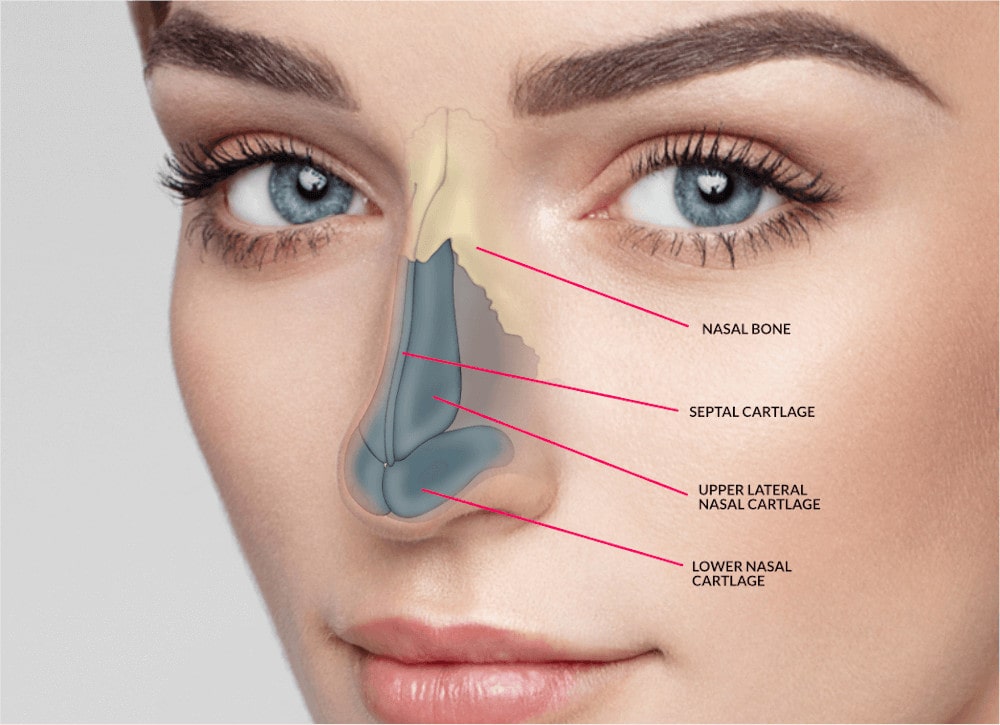
Rhinoplasty is a surgical procedure commonly referred to as a "Nose Job." This requires restoration and reconstruction of the nose to improve its appearance or function. This type of cosmetic surgery can address a variety of issues such as changing the shape, size, or area of the nose, correcting breathing problems, and maintaining the perfect facial profile. By the patient's goal is the nose specific symptoms, surgeons may use a variety of techniques.
Book AppointmentWho require Rhinoplasty Treatment
- Cosmetic Concerns: Nose shape: For aesthetic reasons, individuals may want to change the shape, size, or aspect of their nose. Nasal Symmetry: Some people undergo rhinoplasty to address asymmetry or irregularities in the nose.
- Functional Issues: Breathing problems: A deviated septum or other systemic issues that obstruct breathing that can be corrected with rhinoplasty. Congenital conditions: Some individuals may have congenital nasal issues that affect their physical appearance and function.
- Post-Traumatic Reconstruction: Injury: Accidents or trauma to the nose can cause disabilities or functional problems that can be corrected with a rhinoplasty.
- Age Considerations: In some cases, teenagers may undergo rhinoplasty, but many surgeons prefer to wait until the nose has fully developed.
Surgical Steps of Rhinoplasty Treatment
The surgical steps for rhinoplasty treatment can vary depending on the specific goals of the patient and the procedures preferred by the physician. However, here is an overview of the surgical steps of the procedure.
- Anesthesia: The patient is given local anesthesia or general anesthesia with sedation to ensure comfort and pain freedom during the procedure.
- The Cuts: The surgeon makes the incision based on the chosen technique (open or closed rhinoplasty). In an open rhinoplasty, the columella (the skin between the nostrils) is dissected.
- Access to the Nasal System: The surgeon frees or tears away the skin and soft tissues to gain access to the bone and cartilage.
- Nose Reconstruction: The surgeon then reshapes the nose by removing, reshaping, or adding bone and cartilage. This step is necessary for desired changes in the size, shape, or area of the nose.
- Suture and Cut Closure: Once the necessary adjustments are made, the surgeon closes the incisions with sutures. In closed rhinoplasty, the incision is kept inside the nose, whereas in open rhinoplasty, the external incision is closed.
- Support System: Bandages can be used to support the nose during the initial recovery period.
- Recovery Room: The patient is taken to the recovery room to wake up from anesthesia and is monitored for immediate postoperative complications.
- Postoperative Care: Postoperative patient care guidelines are provided, including information on managing inflammation, bruising, and discomfort.
Depending on your individual needs and the surgeon's perspective, it is important to know the right plastic surgeon to understand the specific steps involved in your rhinoplasty procedure.
What You Need to Know About Your Rhinoplasty
- Recovery Time: Swelling may occur during initial recovery, and it may take several weeks for these effects to subside. However, it can take up to a year or more for the final results of the rhinoplasty to fully show as the nose settles into its new shape.
- Benefits Beyond Cosmetics: Rhinoplasty isn't just about cosmetics; it can address functional issues such as breathing problems or other systemic problems due to a deviated septum.
- Sound Effects: In some cases, rhinoplasty can temporarily affect the sound of the voice. This is usually due to changes in ventilation and pressure during initial recovery.
- Revision Surgery: While many individuals are happy with the initial results, some may opt for revision rhinoplasty to reshape or correct portions of the nose. Revision surgery is often more complex and may require additional skills.
- Emotional Aspects: The decision to have a rhinoplasty can have emotional implications. Before individuals decide which way to go, it is important to consider their motivations, expectations, and possible psychological consequences.
- Risks and Challenges: Like any surgical procedure, rhinoplasty carries risks, including infection, bleeding, and adverse reactions to anesthesia. Choosing a skilled and experienced doctor is important to minimize these risks.
- Effect on Smell: While rare, some individuals experience a temporary change in smell after rhinoplasty. This is usually due to inflammation and congestion in the early stages of healing.
- Long-term Commitment: The nose is completely surgically reshaped. Individuals should consider the decision carefully, as it involves a long-term commitment to the outcome.
Rhinoplasty Treatment in Jaipur can improve confidence and functional improvement when performed by experienced professionals at Raj ENT Hospital. Patients seeking Rhinoplasty Surgery in Jaipur are encouraged to discuss their goals, understand the procedure, and receive personalized recommendations for their specific needs. Schedule a consultation with a qualified rhinoplasty surgeon — Raj ENT Clinic is renowned for their expertise in nasal surgery, and it provides comprehensive care and ensures best results for individuals seeking Nose Surgery in Jaipur.