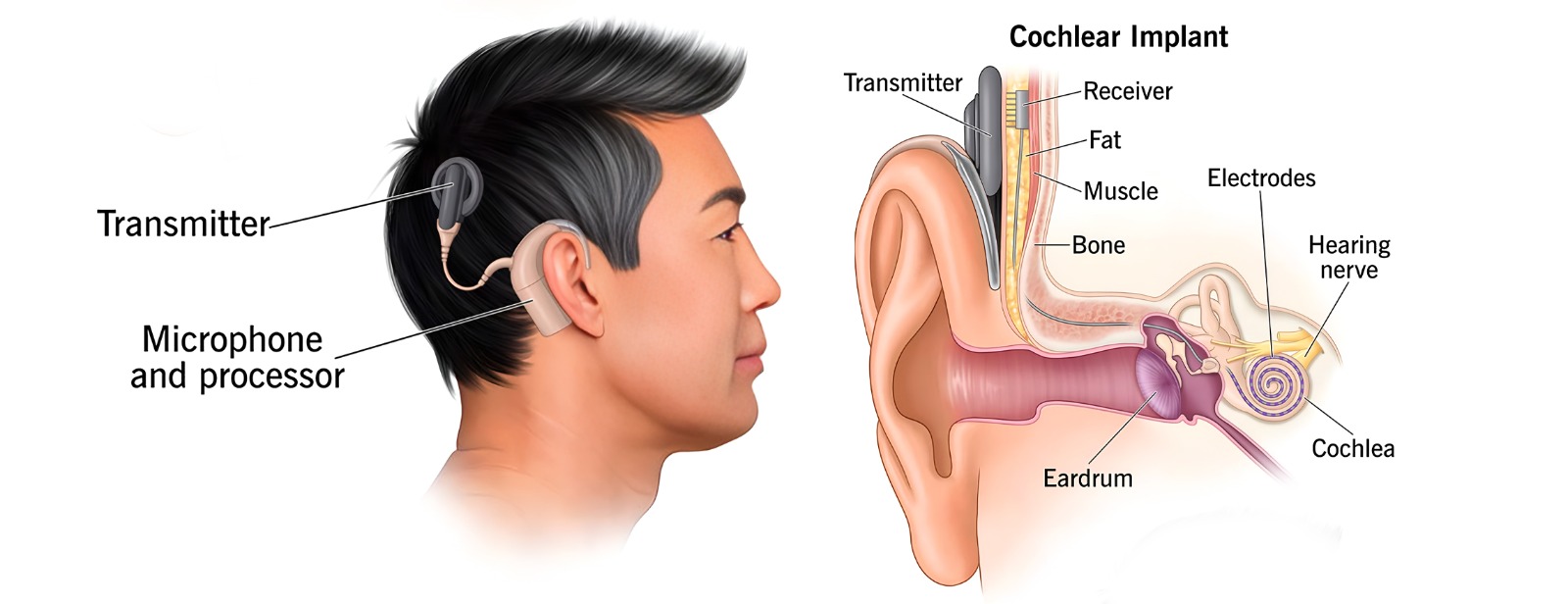
A cochlear implant is a medical device designed to provide a sense of sound to individuals with severe to profound hearing loss. Unlike hearing aids which amplify sounds, Cochlear Implant Surgery in Jaipur bypasses damaged portions of the auditory system to directly stimulate the auditory nerve. This technology is particularly beneficial for individuals who do not receive sufficient benefit from hearing aids due to the extent of their hearing loss.
Book AppointmentHow Cochlear Implants Work and Their Key Components
- Internal Component (Implant) Implanted under the skin behind the ear in a procedure that usually takes several hours. Consists of two main parts — Receiver-Stimulator and Electrode Array.
- External Component (Speech Processor) Worn outside the ear, consisting of a speech processor and a transmitter coil. The speech processor captures and converts environmental sounds into digital signals sent to the body's rhythms. The transmitter coil uses radio frequency to transmit processed signals through the skin to the implant.
How Long Do Cochlear Implants Last?
That depends on the device. In general, the internal parts — the transmitter and electrodes — last indefinitely. The external parts — the sound processor and microphone — typically last five to ten years.
How Long Will It Take Before My Hearing Improves?
The timeline for hearing improvement after Cochlear Implant Center in Jaipur can vary among individuals. Some people experience immediate improvements, while others may take several weeks to months for their hearing to optimize. The brain needs time to adapt to the new auditory input provided by the cochlear implant. It is important to have realistic expectations and patience during the post-implantation period, as hearing improvements are often a gradual process.
Living With a Cochlear Implant
Living with a cochlear implant can be a transformative experience, providing significant benefits for individuals with severe to profound hearing loss:
- Adjustment Period
- Audiologist Support
- Rehabilitation and Training
- Improved Communication
- Water Protection
- Social and Emotional Impact
- Safety Considerations
What Are the Benefits of a Cochlear Implant?
Cochlear Implant Surgery in Jaipur offers several significant benefits for individuals with severe to profound hearing loss:
- Restoration of Hearing Cochlear implants provide hearing to individuals with moderate to profound hearing loss who cannot take full advantage of traditional hearing aids.
- Improved Speech Understanding Many individuals develop improved language comprehension, allowing them to communicate effectively in a variety of environments, including noisy settings.
- Enhanced Quality of Life Cochlear implants can dramatically enhance a person's overall quality of life by reconnecting them to the sounds of the world — conversation, music, and environmental sounds.
- Better Communication Improved hearing with cochlear implants allows for better communication with family, friends, and colleagues — fostering intimacy and social relationships.
Cochlear implant surgery in Jaipur offers individuals with moderate to profound hearing loss a transformative experience as they begin their journey of hearing restoration. The Cochlear Implant Center in Jaipur recognizes the importance of holistic care — ear rehabilitation, ongoing support, and technological advancements all contribute to long-term success. Take your first steps into the world of sound — consult with the Cochlear Implant Center in Jaipur and embrace a transformative journey to improved hearing and a more vibrant lifestyle.