Thyroid problems are common hormonal disorders that can affect metabolism, energy levels, body weight, heart rate, digestion and overall health. Many people diagnosed with a thyroid condition worry that surgery may be necessary to control the problem. However, the good news is that most thyroid disorders can be managed without surgery through appropriate medication, hormone therapy, regular monitoring and lifestyle modifications. The treatment approach depends on the type of thyroid disorder, its severity, the patient's symptoms and the underlying cause.
People looking for reliable Thyroid Treatment in Jaipur should understand that not every thyroid condition requires a surgical procedure. Conditions such as hypothyroidism and many cases of hyperthyroidism can often be controlled with medical treatment. However, certain thyroid nodules, suspicious growths or large goitres may require surgical evaluation. Consulting an experienced ENT Doctor in Jaipur can help patients understand their condition and choose an appropriate treatment plan.
Understanding Thyroid Problems and Their Causes
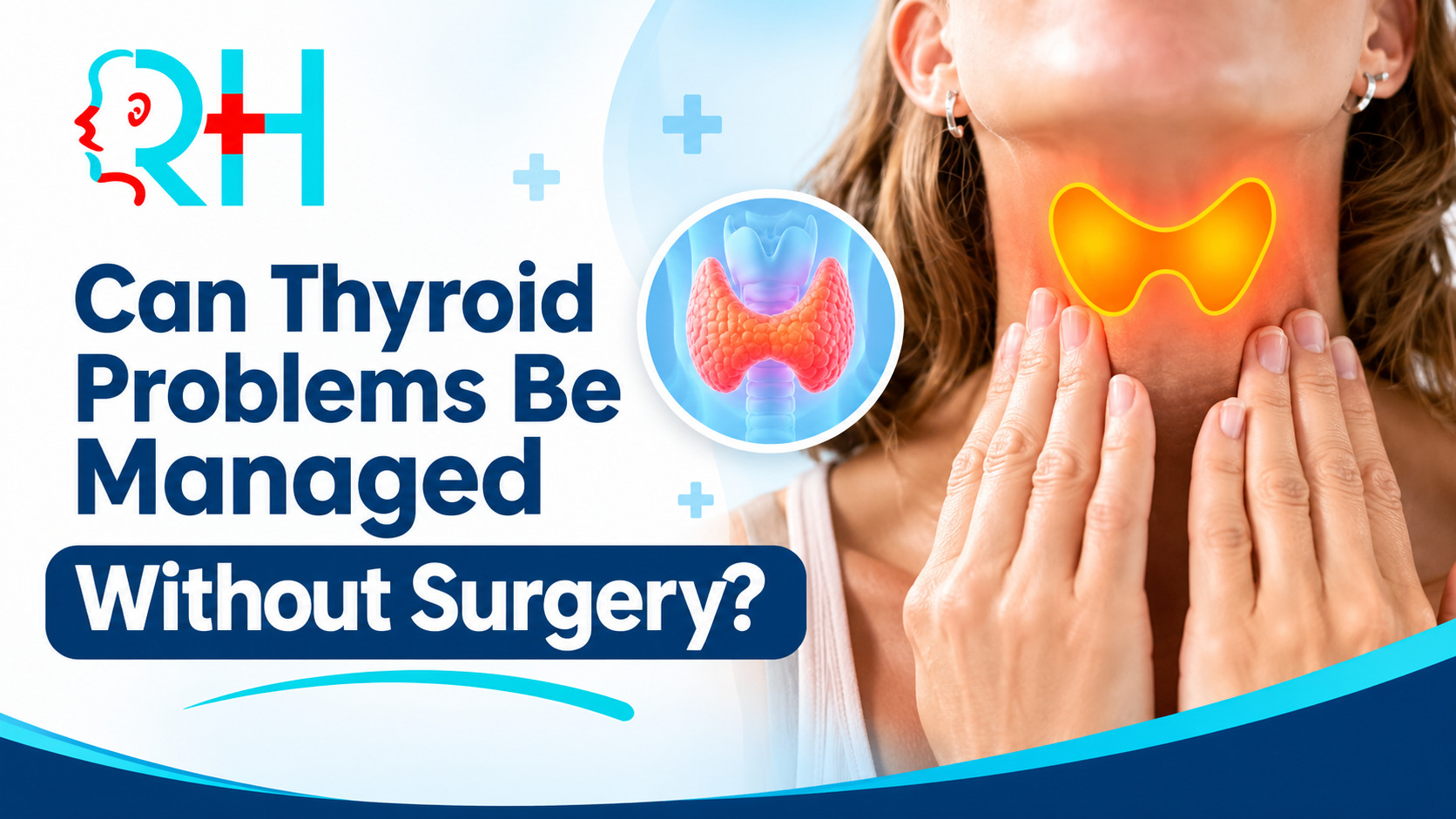
The thyroid is a small, butterfly-shaped gland located at the front of the neck, just below Adam's apple. Despite its small size, it plays an important role in regulating several body functions by producing thyroid hormones, mainly thyroxine (T4) and triiodothyronine (T3).
These hormones influence metabolism, body temperature, heart rate, energy production and growth. When the thyroid gland produces too much or too little hormone, it can lead to different thyroid disorders.
The two most common thyroid conditions are hypothyroidism and hyperthyroidism. Hypothyroidism occurs when the thyroid gland does not produce enough hormones, whereas hyperthyroidism develops when the gland produces excessive thyroid hormones.
Other thyroid-related conditions include thyroid nodules, goitre, thyroiditis and thyroid cancer. Each condition has different causes and treatment requirements. Understanding the underlying thyroid problem is essential before deciding whether medication, monitoring or surgery is necessary.
Can Thyroid Problems Be Treated Without Surgery?
Yes, many thyroid problems can be treated without surgery. Non-Surgical Management of Thyroid Disorders generally involves prescription medications, hormone replacement therapy, radioactive iodine treatment in selected cases and regular thyroid function monitoring.
The treatment depends on whether the thyroid gland is underactive, overactive or affected by structural abnormalities such as nodules.
For example, hypothyroidism is usually managed with thyroid hormone replacement medication, while hyperthyroidism may require antithyroid medicines or other non-surgical treatment options. Some thyroid nodules only require regular observation if they are small, benign and not causing symptoms.
However, surgery may become necessary when a thyroid nodule is suspicious for cancer, causes significant difficulty in swallowing or breathing, or when certain thyroid conditions cannot be adequately controlled through other treatments.
Therefore, an ENT Surgeon in Jaipur can evaluate thyroid-related neck problems and help determine whether medical management or surgical intervention is more appropriate.
Non-Surgical Treatment Options for Thyroid Disorders
Medical Treatment for Thyroid Problems focuses on restoring normal hormone levels, controlling symptoms and preventing complications. Several treatment options are available depending on the diagnosis.
1. Thyroid Hormone Replacement Therapy for Hypothyroidism
Hypothyroidism is a condition in which the thyroid gland does not produce sufficient hormones to meet the body's requirements. Common symptoms include tiredness, unexplained weight gain, constipation, dry skin, hair thinning, sensitivity to cold and difficulty concentrating.
Thyroid Hormone Replacement Therapy is the standard treatment for most patients with hypothyroidism. Doctors commonly prescribe levothyroxine, a synthetic form of the T4 hormone, to replace the hormone that the thyroid gland cannot produce adequately.
The dosage depends on factors such as age, body weight, hormone levels, medical history and other health conditions. Patients generally require regular TSH blood tests to evaluate their response to treatment and determine whether dosage adjustments are needed.
With appropriate medication and monitoring, many people with hypothyroidism can maintain normal thyroid hormone levels and lead healthy, active lives without surgery.
2. Medication for Hyperthyroidism
Hyperthyroidism occurs when the thyroid gland produces excessive amounts of thyroid hormones. This condition can increase the body's metabolic activity and cause symptoms such as rapid heartbeat, excessive sweating, anxiety, unexplained weight loss, hand tremors and sleep disturbances.
Hyperthyroidism Treatment Options include antithyroid medications, radioactive iodine therapy and, in selected cases, medicines that control symptoms.
Antithyroid medicines such as methimazole help reduce the production of thyroid hormones. In certain situations, doctors may prescribe beta-blockers to control symptoms such as palpitations, tremors and rapid heartbeat.
The duration of treatment depends on the underlying cause, particularly whether the condition is associated with Graves' disease, thyroiditis or another thyroid disorder.
Regular medical supervision is important because antithyroid medicines can have side effects and require appropriate monitoring.
3. Radioactive Iodine Therapy
Radioactive iodine therapy is another non-surgical treatment option used for selected patients with hyperthyroidism.
The thyroid gland naturally absorbs iodine to produce thyroid hormones. During radioactive iodine treatment, a carefully prescribed radioactive iodine dose is taken orally. The thyroid gland absorbs it, and the radiation gradually reduces the activity of overactive thyroid tissue.
This treatment is commonly considered for certain patients with Graves' disease or toxic thyroid nodules.
Although radioactive iodine therapy can help control excessive thyroid hormone production, some patients may eventually develop hypothyroidism and require lifelong thyroid hormone replacement medication.
It is not suitable for everyone, particularly pregnant or breastfeeding women.
4. Monitoring Benign Thyroid Nodules
Thyroid nodules are lumps or abnormal growths that develop within the thyroid gland. Most thyroid nodules are benign, meaning they are not cancerous.
Small, asymptomatic and benign nodules may not require surgery. Instead, doctors may recommend regular clinical examinations, ultrasound monitoring and thyroid function tests.
If a nodule shows suspicious features on ultrasound, a fine-needle aspiration biopsy may be recommended to examine its cells.
The treatment decision depends on the nodule's size, appearance, growth pattern, biopsy findings and symptoms. Nodules causing pressure, swallowing difficulties or breathing problems may require additional intervention.
What Tests Are Required Before Choosing Thyroid Treatment?
Accurate diagnosis is essential for effective Thyroid Disease Management. Doctors usually recommend a combination of blood tests and imaging investigations to understand thyroid function and identify structural abnormalities.
Thyroid function tests are among the first investigations performed. TSH testing helps assess how effectively the thyroid gland is functioning. Free T4 and, in selected cases, T3 tests provide additional information about hormone levels.
Thyroid ultrasound helps identify nodules, cysts, enlargement and other structural changes in the gland. If a nodule appears suspicious, a fine-needle aspiration cytology (FNAC) test may be advised.
Depending on the suspected condition, doctors may also recommend thyroid antibody tests, such as anti-TPO antibodies, or a radioactive iodine uptake scan.
These investigations help distinguish between different thyroid disorders and determine whether medication, observation, radioactive iodine therapy or surgery is required.
Can Lifestyle Changes Help Manage Thyroid Problems?
Lifestyle modifications can support thyroid health and improve general well-being. However, they cannot replace prescribed Thyroid Medication and Hormone Therapy.
A balanced diet containing adequate iodine, selenium, zinc, iron and protein supports normal body functions. Iodine is essential for thyroid hormone production, but excessive iodine intake can worsen certain thyroid conditions. Therefore, iodine supplements should only be taken when medically recommended.
Regular physical activity can help improve energy levels, support weight management and maintain cardiovascular health. Patients experiencing severe fatigue or uncontrolled hyperthyroidism should consult their doctor before starting an intensive exercise routine.
Adequate sleep, stress management and consistent meal patterns can also support overall hormonal health. Patients taking levothyroxine should follow their doctor's instructions regarding medication timing and food interactions because certain foods and supplements can affect its absorption.
When Is Thyroid Surgery Necessary?
Although many thyroid disorders can be managed without surgery, some conditions require surgical treatment.
Thyroid surgery may be recommended when a thyroid nodule is confirmed or strongly suspected to be cancerous, when a large goitre causes difficulty swallowing or breathing, or when hyperthyroidism cannot be adequately controlled with medication or other suitable treatments.
Surgery may also be considered for certain toxic nodules and other thyroid conditions based on their clinical features.
An ENT Surgeon in Jaipur can assess neck swelling, thyroid nodules and related symptoms to determine whether surgery is appropriate. The decision should be based on diagnostic findings, individual health requirements and a discussion of the available treatment options.
Why Is Regular Thyroid Monitoring Important?
Thyroid disorders often require long-term management rather than a single course of treatment. Regular monitoring helps doctors understand how well the treatment is working and identify changes in hormone levels.
Patients taking thyroid medication may need periodic TSH and other thyroid function tests, particularly after starting treatment or changing the dosage. Once hormone levels become stable, the doctor may recommend less frequent testing depending on the patient's condition.
Regular follow-ups also help identify medication-related side effects, changing symptoms and complications that may require a different treatment approach.
Ignoring thyroid symptoms or changing medication doses without medical advice can affect hormone balance and overall health.
Conclusion
Thyroid problems do not always require surgery. Many conditions, including hypothyroidism and several forms of hyperthyroidism, can be effectively managed through medication, hormone replacement therapy, radioactive iodine treatment and regular monitoring. Even certain thyroid nodules can be safely observed without immediate surgical intervention.
The most important step is obtaining an accurate diagnosis and following a treatment plan based on the specific thyroid condition. If you experience persistent thyroid-related symptoms or notice unusual swelling in your neck, consult an experienced ENT Doctor in Jaipur for appropriate evaluation. Timely medical care, regular thyroid function management and informed treatment decisions can help maintain hormonal balance and support long-term health